

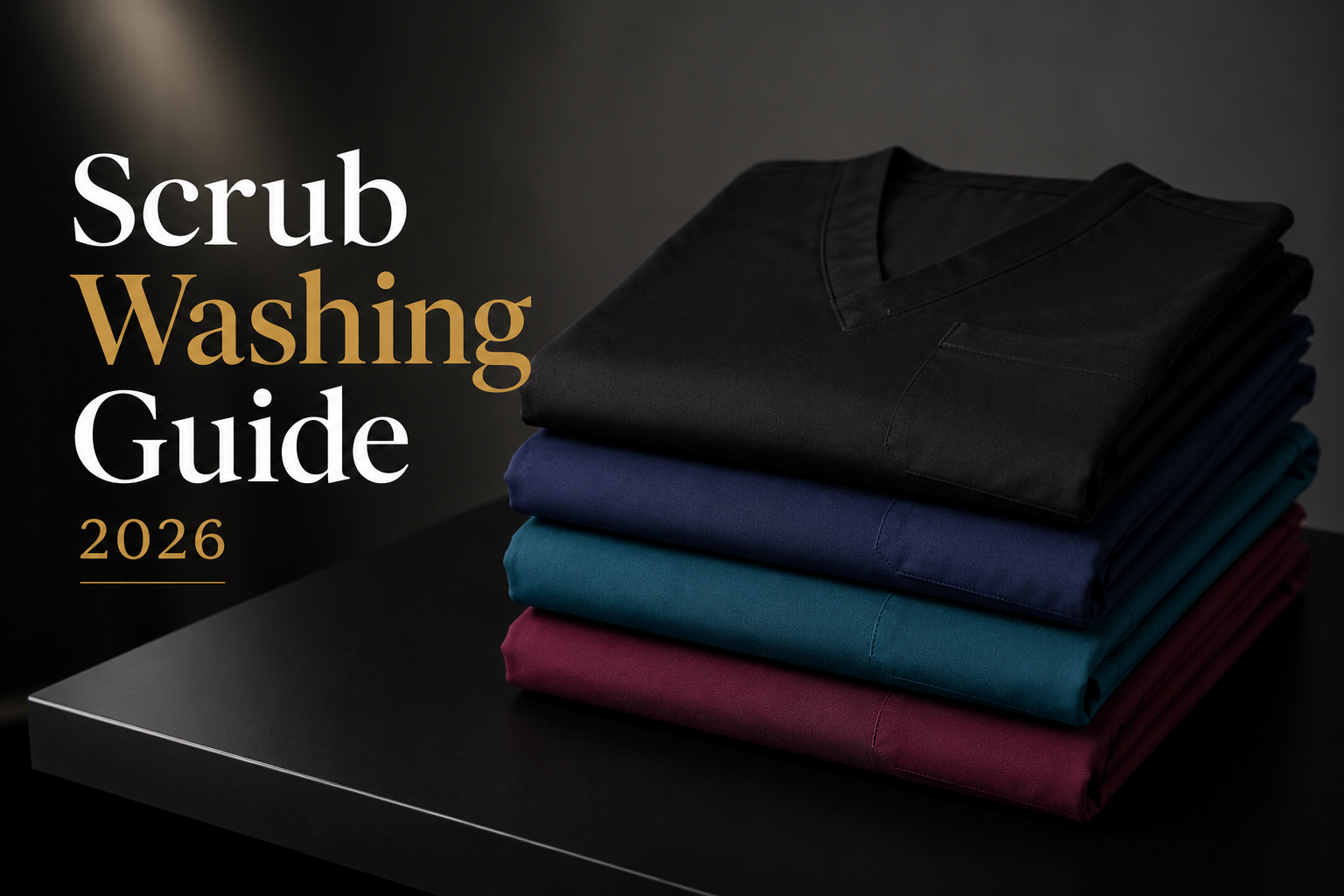
Scrub Care Guide • Updated 19 June 2026
How to Wash Medical Scrubs Properly: A Step-by-Step Guide for Indian Healthcare Professionals
Wash medical scrubs separately from household laundry, on the same day you wear them. Pre-treat visible soiling, turn scrubs inside out, and machine-wash on the warmest setting the fabric allows with a quality detergent. For most blends, 40–60°C is effective. Dry fully, then store clean. This routine limits the pathogen load that scrubs carry between the ward and your home.
Why this matters: A peer-reviewed cohort study published in Open Forum Infectious Diseases sampled 720 sets of healthcare-worker scrubs and found that 30% carried pathogenic bacteria after a single shift. Correct laundering is one of the few contamination controls fully within your own hands. (Escobar et al., 2017)
Why washing scrubs correctly is a clinical responsibility, not a chore
Scrubs are a working surface. Across an Indian shift — often 8 to 12 hours in warm, high-traffic wards — they collect sweat, skin flora, and organisms picked up from patients, beds, and equipment. India carries one of the higher healthcare-associated infection burdens globally; the ICMR HAI surveillance network, monitored through the Indian Council of Medical Research, tracks infection rates across dozens of hospitals precisely because the stakes are high. Your laundering routine is a small but genuine link in that chain.
Two practical truths shape good scrub care. First, contamination happens during normal work, not just during obvious spills. Second, no fabric — antimicrobial or otherwise — replaces a disciplined wash. The goal is simple: end every shift by getting your scrubs clean, dry, and ready, without contaminating the rest of your home in the process.
How to wash medical scrubs: the step-by-step method
Step 1 — Separate scrubs from everything else
Never wash scrubs with towels, bedsheets, or your family's clothes. Keep a dedicated laundry bag for work wear and transport soiled scrubs in it. This single habit prevents cross-contamination of household textiles.
Step 2 — Wash on the same day, every day
Bacteria multiply on damp, warm fabric. Don't let scrubs sit overnight in a bag. Same-day washing keeps the pathogen load low and protects the fabric from set-in sweat and odour.
Step 3 — Pre-treat stains and visible soiling
Blood, betadine, and biological fluids should be rinsed in cold water first — hot water sets protein stains. Dab a mild detergent or stain remover onto the spot before the main wash. Avoid harsh chlorine bleach on coloured scrubs; it degrades fibres and fades dye.
Step 4 — Turn inside out and wash warm
Turning scrubs inside out protects surface colour and prints while exposing the side that sits against your skin to the cleaning action. Use the warmest temperature the care label permits — typically 40–60°C for medical blends — with a full-strength detergent. Don't overload the drum; clothes need room to move to get clean.
Step 5 — Dry completely
Thorough drying matters as much as washing — residual moisture lets surviving microbes regrow. A hot tumble-dry cycle adds a useful thermal step. If you line-dry, as most Indian households do, choose direct sunlight: UV exposure helps reduce surface microbes and keeps whites bright. Make sure scrubs are bone-dry before folding.
Step 6 — Store clean, change at the right place
Store laundered scrubs in a clean, dry drawer — not the same bag you carry soiled ones in. Where your facility provides changing space, change into and out of scrubs at work rather than commuting in them, to keep ward organisms out of public transport and your home.
“In clinics and wards I've worked across, the biggest laundering mistake isn't temperature — it's letting scrubs sit damp in a bag for hours. Wash the same day, dry them fully, and keep work wear away from home laundry. That discipline does more for hygiene than any single 'antibacterial' label.”
— Dr. Tanmay Kumar, DPT, Founder of Alleda Scrubs and Head of Department at the Capri Institute of Manual Therapy
Fabric matters: how to wash UltraFlex vs PrimaFlex scrubs
Different fabrics need slightly different care. Alleda builds two distinct lines, and washing each correctly protects both its performance and its lifespan.
| Care factor | UltraFlex — Rayon + Polyester + Spandex (4-way stretch) | PrimaFlex — 180 GSM Polyester blend |
|---|---|---|
| Wash temperature | Warm, up to 40°C. The rayon content drapes beautifully but prefers gentler heat to hold shape. | Warm to hot, up to 50°C. Polyester tolerates higher temperatures well. |
| Spin & cycle | Gentle/normal cycle. Avoid aggressive spins to preserve 4-way stretch recovery. | Normal cycle. Hard-wearing and forgiving for daily turnaround. |
| Drying | Line-dry in shade or low tumble. Keep direct harsh sun limited to protect spandex elasticity. | Line-dry in sun or tumble-dry low. Dries fast and resists wrinkling. |
| Avoid | Chlorine bleach, fabric softener (coats fibres and reduces wicking), very high dryer heat. | Chlorine bleach on colours, ironing on high heat (polyester can glaze). |
Always follow the care label first. The rayon in UltraFlex is what gives it superior moisture-wicking and drape in hot Indian wards — protecting it with gentler heat keeps that performance intact wash after wash.
Common scrub-washing mistakes to avoid
- Using fabric softener. It leaves a film that traps odour and blocks moisture-wicking — the opposite of what a performance scrub is built for.
- Washing with home laundry. This defeats the purpose; ward organisms transfer onto family clothing.
- Letting scrubs dry partially. Damp fabric folded into a drawer is a breeding ground.
- Over-bleaching colours. It weakens fibres, shortens scrub life, and fades your professional appearance.
- Commuting in worn scrubs. Where a changing area exists, change at work to keep the clinical environment contained.
Quick answer — how often should you wash scrubs? After every single shift, without exception. Scrubs worn for even one shift can carry pathogenic bacteria, so daily laundering is the baseline standard for any nurse, doctor, physiotherapist, or allied health professional.
Built to be washed daily: the Alleda approach
A scrub is only as good as its hundredth wash. Alleda Scrubs are engineered for the reality of Indian clinical life — repeated hot-climate shifts and frequent, sometimes hot, laundering. UltraFlex uses a rayon-polyester-spandex tri-blend with 4-way stretch for mobility and moisture management, while PrimaFlex delivers a dependable 180 GSM polyester blend for everyday wear at an accessible price. Both are designed to hold colour, fit, and structure through the wash cycles a working professional puts them through.
That durability is grounded in clinical experience: Alleda is led by a physiotherapist who has trained over 4,000 professionals through the Capri Institute of Manual Therapy, so the engineering decisions start from how clinicians actually move, sweat, and launder across a real shift.
Frequently asked questions
What temperature should I wash medical scrubs at?
Wash scrubs at the warmest temperature the care label allows. For most medical blends this is 40–60°C, which balances effective cleaning with fabric protection. Polyester-heavy scrubs like PrimaFlex tolerate the higher end; rayon-blend scrubs like UltraFlex prefer around 40°C to preserve drape and stretch.
Can I wash scrubs with my regular clothes?
No. Scrubs should always be washed separately from household laundry. Worn scrubs can carry pathogenic bacteria from the ward, and washing them with towels or family clothing risks cross-contamination. Keep a dedicated laundry bag and run scrubs as their own load, same day.
Should I use bleach on my scrubs?
Avoid chlorine bleach on coloured scrubs — it weakens fibres and fades dye, shortening the garment's life. For white scrubs, a diluted oxygen-based (non-chlorine) bleach is gentler. A good detergent, correct temperature, and full drying handle most hygiene needs without harsh chemicals.
Does sun-drying help disinfect scrubs?
Yes, to a degree. Sunlight's UV exposure helps reduce surface microbes and keeps whites bright, which suits most Indian households that line-dry. The essential point is that scrubs dry completely — residual moisture allows surviving microbes to regrow, so never fold away damp scrubs.
Why shouldn't I use fabric softener on performance scrubs?
Fabric softener coats fibres with a residue that traps odour and blocks the moisture-wicking that performance scrubs rely on. On a tri-blend like UltraFlex, this directly reduces the comfort you bought the scrub for. Skip softener entirely; use a quality detergent instead.
About the author
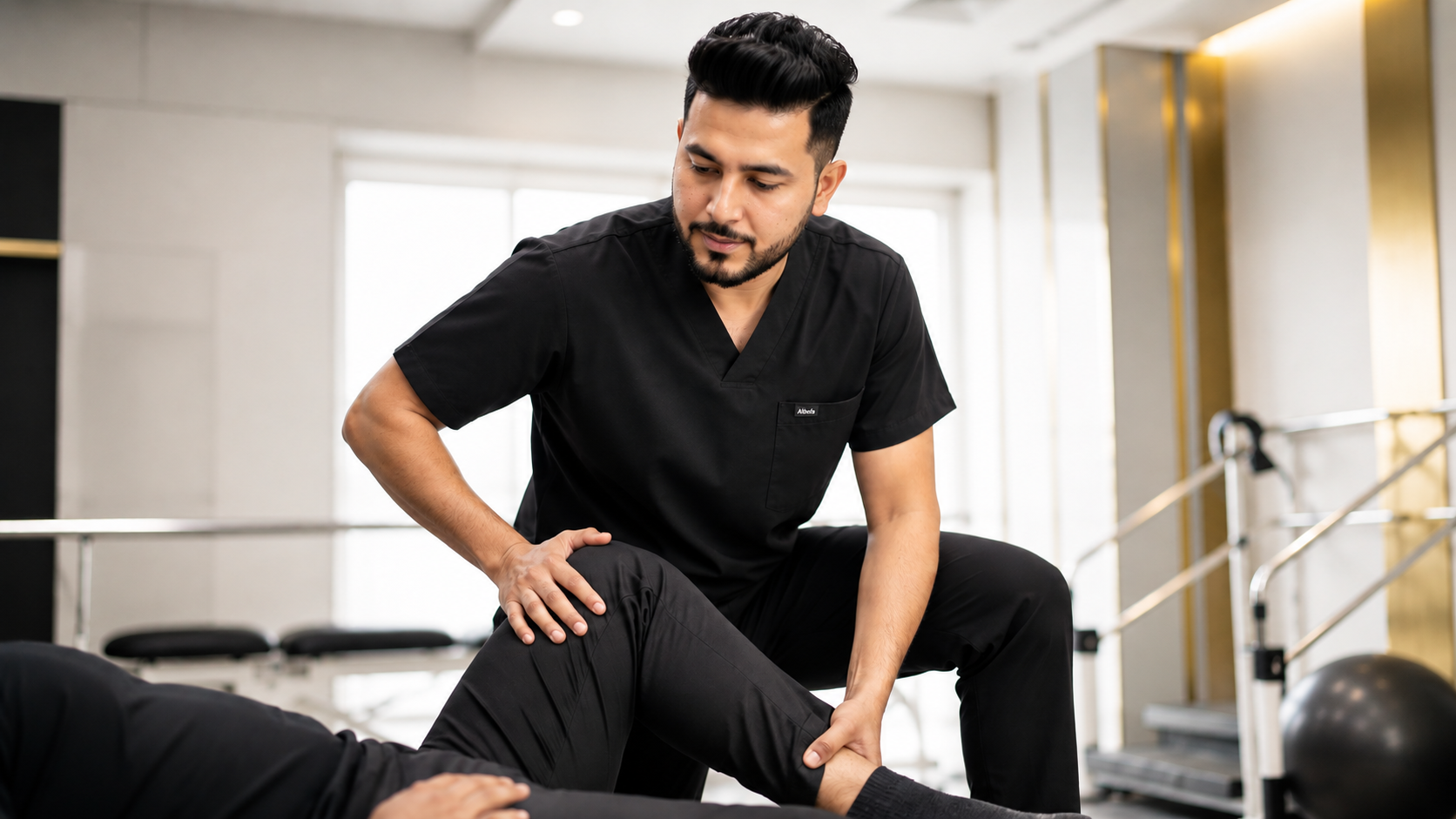
Dr. Tanmay Kumar, DPT — Founder, Alleda Scrubs | Head of Department, Capri Institute of Manual Therapy. A practising physiotherapist who has trained 4,000+ professionals across 100+ workshops, Dr. Kumar founded Alleda to bring clinically-informed apparel engineering to Indian healthcare professionals.



Share:
Why Do Doctors Wear Scrubs Instead of Regular Clothes?
Best Medical Scrubs for Physiotherapy in India (2026)